
“Sempre Vigilante”
~Lema da Civilian Air Patrol
Não importa para onde eu vá, sair de casa me coloca em uma de duas avenidas de seis faixas. Suponho que essa seja a vida em uma metrópole de quatro milhões: as cidades têm seus benefícios; o trânsito não é um deles.
Ao virar para uma daquelas ruas principais em uma corrida de sábado ao supermercado, quando o semáforo ficou verde, fiz o que sempre faço: olhei para os dois lados para ter certeza de que os veículos que se aproximavam realmente iriam parar. Requisito? Não. Um simples ato de autopreservação?
Com certeza.
O único veículo vindo em minha direção na estrada transversal – uma caminhonete branca andando exatamente no limite de velocidade de 90 km/h – não deu absolutamente nenhuma indicação de que faria algo remotamente parecido com parar em um sinal vermelho. O veículo e o motorista cruzaram a interseção como se o semáforo não existisse.
Para aquele motorista, suponho que não.
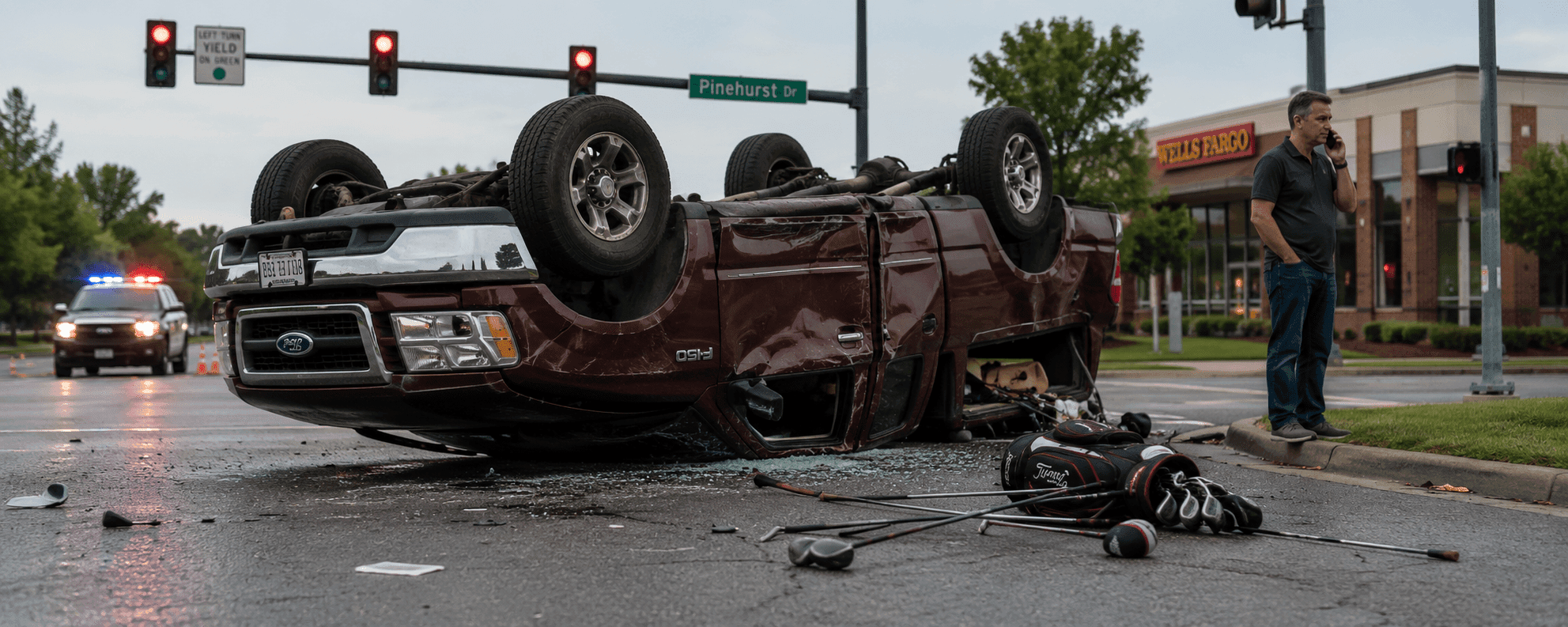
Se você está pensando, “Qual o problema com isso? Coisas assim acontecem o tempo todo” Eu não discordaria. No dia seguinte – domingo – havia um pick-up vermelho estacionado bem no meio do mesmo cruzamento: de cabeça para baixo. O motorista estava na esquina, falando ao celular; um sedan com a frente amassada estava parado na faixa de cruzamento. Eu não descartaria a possibilidade de o motorista do pick-up estar falando com seu advogado.
Quanto a mim e aquela caminhonete branca, o motorista decidiu parar no próximo cruzamento, a uns 1,6 km de distância. Foi lá que eu parei bem atrás dele – e do veículo da empresa que ele dirigia. O fato de o número da caminhonete e o nome da empresa estarem exibidos em destaque eu considerei um sinal, então peguei meu celular e tirei uma foto.
Depois de ver o acidente no domingo, me ocorreu que eu deveria fazer algo a respeito do que aconteceu sob minha vigilância. Encontrar o empregador do motorista na internet foi fácil: uma agência pública de alto perfil com um site chamativo; até listavam um endereço de e-mail para o CEO deles.
Às 14h de domingo, estavam em sua caixa de entrada os fatos e fotos; às 18h eu já havia recebido uma resposta.
Fiquei impressionado: um executivo que lê e-mails nos fins de semana e leva a sério furar um sinal vermelho.
Voo Jazz 646
Pois é, a vida nas ruas de Houston; que tal furar um sinal vermelho em um espaço altamente regulamentado e rigidamente controlado, como uma pista em um grande aeroporto? Não pense que isso nunca poderia acontecer.
Na noite de domingo de março, um voo da Air Canada Jazz recebeu autorização para pousar no Aeroporto LaGuardia, em Nova York. Ao mesmo tempo, uma brigada de combate a incêndio de aeronaves composta por sete veículos respondia a uma emergência. Aeroportos são locais onde controladores de voo são responsáveis por tudo o que se move – no ar e no solo. Conforme o caminhão de bombeiros se movia para a frente do comboio, seu motorista solicitou permissão à Torre para cruzar a pista ativa onde o voo da Jazz estava prestes a pousar.
Vinte e oito segundos depois, a aeronave colidiu com o caminhão de bombeiros a uma velocidade em solo de mais de 100 milhas por hora. Dois pilotos morreram; trinta e nove passageiros feridos, seis gravemente; o caminhão de bombeiros demolido.
A tarefa nada invejável de investigar tragédias aéreas como esta recai sobre o National Transportation Safety Board. O Conselho tem um século de experiência; você não encontrará ninguém melhor em peneirar evidências forenses e avaliar todos os fatores relacionados, para dar sentido ao que aconteceu. Como seria de esperar, o trabalho deles acontece em uma atmosfera carregada de emoção, com todos os tipos de partes interessadas, nenhuma das quais quer ser encontrada errada.
Soa familiar?
Parte da inteligência operacional do Conselho – habilidades investigativas, processos e execução – reside na sua capacidade de manter a paz na família enquanto descobre a verdade. Nesse acidente (a palavra é usada pelo Conselho, então por favor, sem sermões de que “acidentes não acontecem”), havia mais de uma dúzia de entidades com interesse na disputa, incluindo o sindicato da polícia de Nova York.
Isso pode soar familiar também.
Apesar dos obstáculos, em questão de semanas o Conselho produziu um relatório preliminar de quinze páginas, com os fatos que explicam o que deu errado: quando, onde, o que, como e quem. A única coisa que falta é o porquê; algo que, na minha opinião, é altamente superestimado.
Quanto a você, o relatório preliminar é mais do que suficiente para entender as lições que você precisa aplicar onde trabalha – e liderar.
28 Segundos de Caos
Navegar pelo relatório do Conselho não é para os fracos de coração. Entre os desafios estão duas dúzias de acrônimos da aviação. Achei necessário criar um glossário de termos para dar sentido às coisas: LGA, Aeroporto LaGuardia; LC, controlador local, também conhecido como Torre; ARFF é um veículo de combate a incêndio e resgate de aeronaves; eram sete deles. Um acrônimo merece atenção especial: REL, luzes vermelhas de entrada da pista.
Você sabia que existem luzes vermelhas embutidas na superfície das pistas de táxi que indicam aos veículos para não entrar ou cruzar – porque uma aeronave está chegando? Os RELs são até programados para se sincronizar com a aeronave conforme ela se move pela pista. Não é difícil adivinhar o que causou a criação e instalação dessa tecnologia.
Aviso ao leitor: se você vê a tecnologia como a solução para problemas criados pelo comportamento humano, o que virá a seguir não será do seu agrado.
Os 28 segundos entre o pedido de cruzar uma pista ativa e a colisão foram o cerne do problema. Fatos pintam um.
O motorista do caminhão de bombeiros recebeu a primeira mensagem – ok para cruzar – mas nenhuma outra. O veículo continuou a acelerar, indo direto para a pista ativa enquanto a aeronave em pouso tocava o solo.
Com os RELs - luzes de entrada da pista - acesas e vermelhas. Outro caso de avanço de sinal vermelho.
Seu Interesse no Caso
Por política, o NTSB é obrigado a determinar a causa provável: a razão primária e direta do evento. Por que o Conselho escolheu um termo técnico associado à prática de um crime, isso é algo que você terá que perguntar a eles.
Dito isso, na maioria dos lugares por onde passo, avançar o sinal vermelho é contra a lei.
O Conselho tem muitos fatos e fatores para escolher: a permissão para cruzar foi primeiro concedida, depois negada; conversas ocorreram em múltiplas frequências de rádio; o radar não rastreou todos os sete veículos de emergência; a resposta humana normal a uma emergência; o REL foi extinto dois segundos antes da colisão (sim, você leu certo). Não invejo a tarefa do Conselho.
Eles têm seus desafios, você tem os seus: o erro humano pode ser fatal. Seu trabalho é impedir que isso aconteça. Boa sorte se você acha que delega isso à tecnologia – como RELs – e marca a caixa, “problema resolvido”.
Dirigir é hoje o caso célebre, Então, entrando em detalhes, o seu dever é garantir que ninguém na sua empresa que dirija um veículo da companhia fure um sinal vermelho. Ponto final. Não importa se ele é o Chefe dos Bombeiros dirigindo o caminhão de bombeiros da empresa para atender uma emergência – ou alguém pegando um almoço extra para uma equipe trabalhando no sábado.
Em nenhuma circunstância é aceitável que um motorista perca a noção dos sinais de trânsito ou do tráfego. Se o motorista do caminhão de bombeiros simplesmente.
Suponho que seja possível que você seja o sortudo líder sem seguidores que dirigem. Mas os.
Então, qual é o seu processo para impedir que alguém passe no sinal vermelho sob sua vigilância?
Definindo Expectativas
Existe um lugar para treinamento e educação de motoristas. Mas quando alguém avança o sinal vermelho, quais são as chances de a “causa provável” (para usar um termo) ter sido a falta de conhecimento?
A consciência situacional é o suspeito mais provável.
Você não pode estar lá para quando precisar lembrar um bom seguidor de manter os olhos na estrada, olhar em ambas as direções antes de atravessar a rua, ignorar o celular, não fazer suposições sobre o que outros motoristas farão.
Em outras palavras, “Olhe pelos outros – e por você.”
Isso soa muito com a introdução do que aqui chamamos de Discurso da Moita de Segurança: definir expectativas e dar conselhos sobre algum aspecto do trabalho seguro. Qual é o seu Discurso da Moita sobre dirigir, consciência situacional e parar em sinais de trânsito?
É melhor definir as expectativas e dar o seu melhor conselho agora do que explicar o que alguém.
A última palavra
Quanto à caminhonete branca que passou no sinal vermelho sob minha supervisão, a solução da gerência foi enviar o culpado para treinamento de direção. Quanto a ações corretivas, você pode avaliar essa solução.
Eu imagino o motorista sofrendo com a Direção Defensiva em uma manhã de sábado, resmungando baixinho, “Algum idiota me arruma problema com o chefe e estraga meu dia de folga.”
Se isso soa um pouco familiar, pode indicar um problema diferente e uma solução mais apropriada para mudar o comportamento.
Paul Balmert
Junho de 2026