
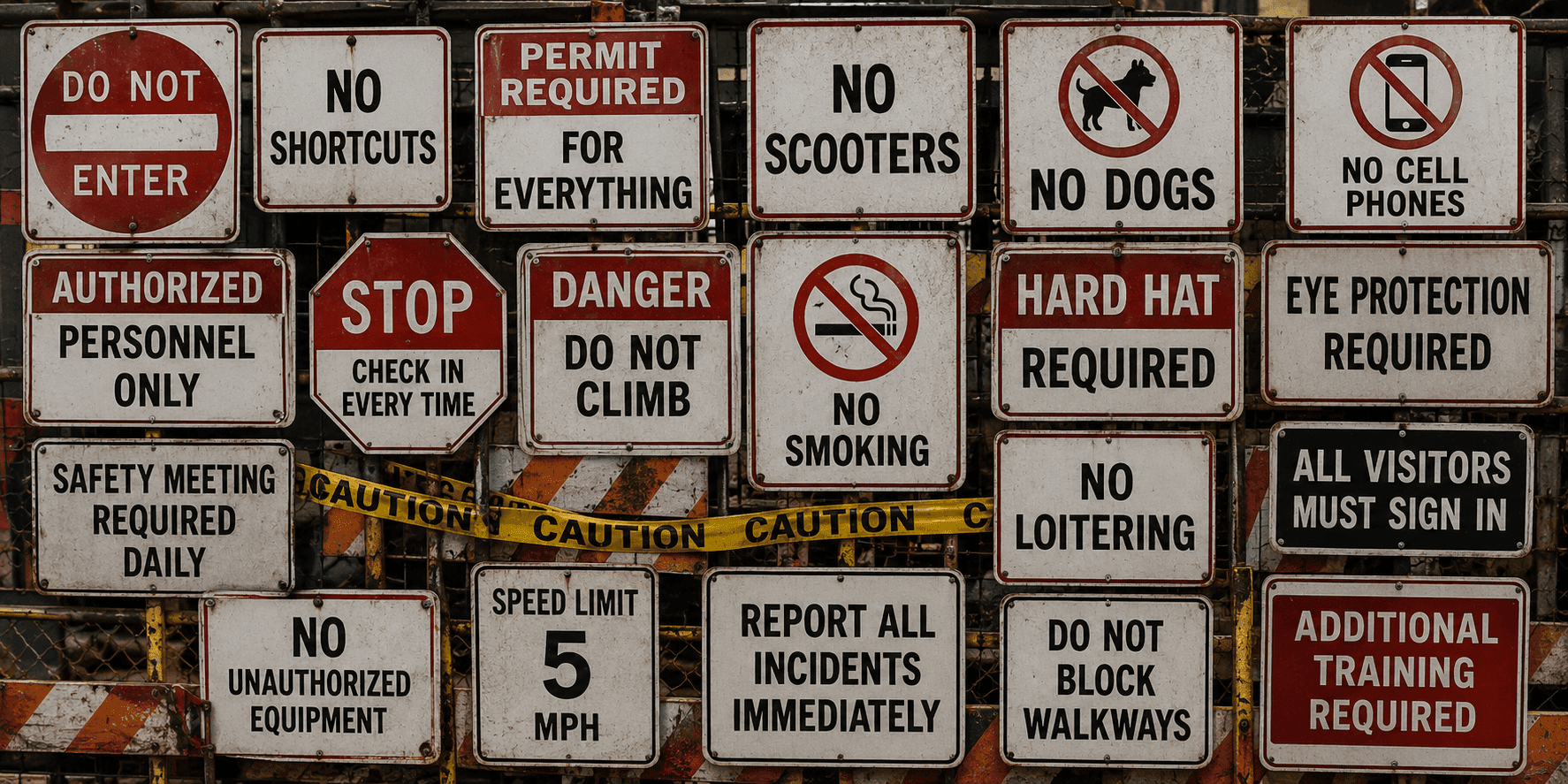
The best safety meetings happen when the crew does most of the talking, the Ask, Don’t Tell Safety Meeting method is a simple process to accomplish that. This month we’ve already put an idea for you into that format. As a quick reminder, the Ask, Don’t Tell Safety Meeting model is to:
- Determine a specific purpose for the topic you choose to discuss.
- Connect the information to your team: why should they be interested in the subject? Make it personal – to them.
- Ask two or three Darn Good Questions about the topic.
Purpose:
My purpose in talking about this topic with my team is so that we recognize how everyday behaviors and choices can eventually lead to new rules, restrictions, and procedures — and that we all take ownership in addressing everyday issues before they grow into something bigger.
Headline: Dumb Rules – Always Exist For A Reason
Summary of the Information:
We’ve all seen those sorts of rules; unnecessary, frustrating, and disconnected. Usually, those rules are created because of poor decisions, or a few people creating problems that leadership felt they had to control.
An example – when something is banned entirely because one person misused it.
Our safety culture shouldn’t rely on endless layers of rules. It should rely on us – paying attention, speaking up, correcting problems early, and working together to manage problems before leadership feels pressure to create another policy or restriction.
Connection:
The reason it is important for us to talk about this topic today is because (pick an issue you are currently seeing that could result in a change to a policy). The more we address unsafe behaviors, shortcuts, and poor decisions early, the less likely we are to end up with unnecessary restrictions that make the job harder for all of us.
Darn Good Questions:
- Can you think of a rule that was probably created because of the actions of a few people?
- How can we address problems early before they turn into more procedures or restrictions?
- What responsibility do we have to protect the flexibility and trust we have on a jobsite?