
Were you asked to sum up the purpose of a safety meeting in a few words, what would you say?
For those doing the work, a safety meeting is a time to think about how best to go about the day’s work safely.
But what about for you—the leader conducting that meeting?
Certainly, it’s an opportunity to influence your followers. And a chance to take control of the things you can control: methods, procedures, job assignments, plans and schedules.
But it’s also something else; an opportunity to collect information.
Every safety meeting gives a leader the chance to learn what’s really going on: what’s working, what isn’t, what has changed, and what might not be going the way it ought to.
We call that kind of information Early Warning Indicators: information a leader can use to forecast the future direction of their followers’ safety performance.
Think about all the safety numbers organizations like yours routinely track: recordable injuries, TRIR, DART rates, lost-time cases, vehicle incidents and near misses. They’re useful measures.
But most have one significant limitation: they tell you what has already happened.
An Early Warning Indicator tells you what might happen next.
Maybe it’s a piece of equipment that hasn’t been working quite right. A procedure that looks good on paper but doesn’t work particularly well in the field. A schedule that has everyone rushing. A workaround that is becoming a standard practice. Or a close call that nobody thought was important enough to report.
Those are the things you want to know about before somebody gets hurt.
Because the last thing any leader wants to hear after a serious accident is “It was an accident waiting to happen.”
…..
If you aren’t regularly getting good information about Early Warning Indicators in your regular safety meetings, here’s an Ask, Don’t Tell Safety Meeting template that might help:
Purpose:
I’d like us all to talk about communicating what we call Early Warning Indicators: information that isn’t formally recorded that help us see where our safety is headed.
Headline:
Death of a worker was described as “accident waiting to happen” after he was run over by an excavator.
Summary of the Information:
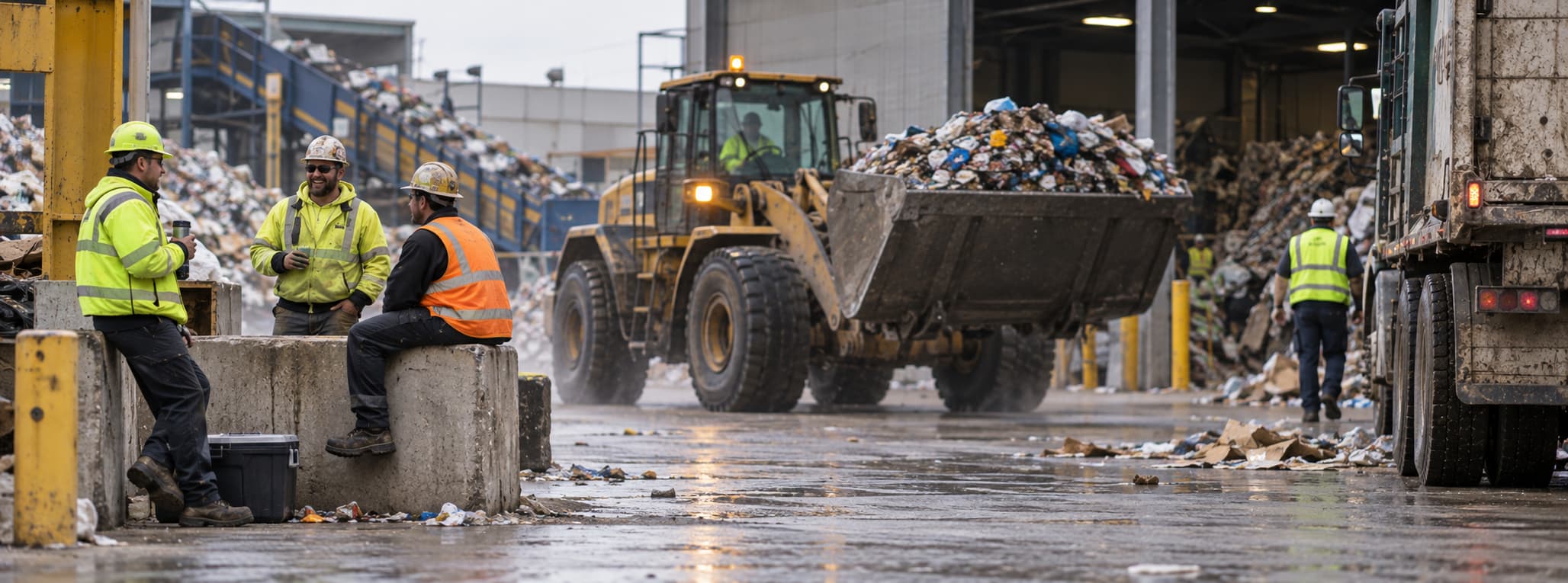
An employee at a waste management facility was backed over by an excavator. “The use of very large machinery and the existence of numbers of pedestrians in a relatively confined space…” was described as the primary factor in the accident. “In one video played to the court, workers were seen kicking a football around as machines were driven past them, with others ‘milling around’.”
Connection:
The reason I want to talk about this today is to ensure these sorts of Early Warning Indicators aren’t being ignored. No one should ever go home hurt – or worse – over something we all saw coming.
Darn Good Questions:
- Is there anything happening around here that might lead to something like this happening?
- What sort of things that aren’t normally or formally reported be useful in discussing to ensure we all go home safely?
- Why should taking a moment to discuss Early Warning Indicators be part of each of our meetings?