
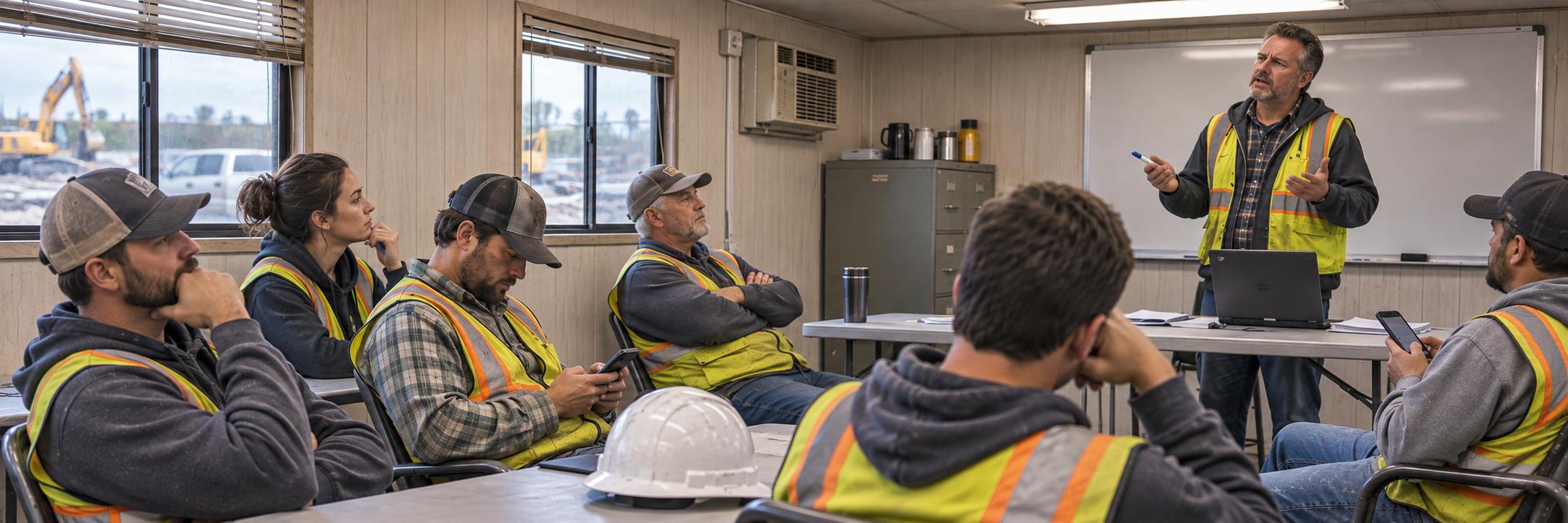
The idea of a safety meeting may well be as old as the accident itself. Wherever there’s been work to be done that was known to have caused harm, it’s likely those doing that work would have taken the time to talk about how to keep that from happening again.
Do the same work every day, it’s also no surprise finding something new and interesting to discuss can become a challenge of its own. When the meetings begin to feel routine and complacent, they may even be doing more harm than good.
Surprisingly, workplace safety meetings as we know them today only date back to the past 100 years or so. The first national safety congress convened in 1912, and the National Safety Council was established in 1913. Around then companies began sharing safety methods, promoting employee education, and organizing safety committees.
Fast forward to 1933, a U.S. Bureau of Labor Statistics publication recounts a safety professional who was asked what single safety activity he would retain if forced to give up everything else.
His answer? Meeting with workers every morning. Not because he had so much to tell them, but because he had so much to learn from them.
Sound familiar?
We’ve been teaching the Ask, Don’t Tell safety meeting approach for a quarter of a century now for good reason. Asking questions and listening to the answers provides the leader an opportunity to learn more about what’s really going on. We call that Performance Visibility.
Safety meetings also offer a leader countless opportunities to both lead and manage safety performance.
Opportunities like:
- Getting information about leading indicators.
- Getting feedback about safe work practices.
- Reinforcing safe work behavior.
- Correcting unsafe work behavior.
- Gaining buy in on safe work practices when there isn’t.
- Making the sale on change.
- Reinforcing why safety is always the most important thing.
If you’re looking for ways to improve your safety meetings, recognizing that listening is as important as telling is a great place to focus. Simply asking good questions is an easy way to do that.
They also provide a unique opportunity to lead and manage safety performance.
In our humble opinion.